


Prerequisites
Verified Domain
Make sure you have a verified domain added in AutoSend to send emails from.
SMTP Key
Create a project-specific SMTP key from the SMTP tab in Project Settings.
Configuration
Open Descope Connectors
- Go to your Descope Console
- Navigate to Connectors in the sidebar.
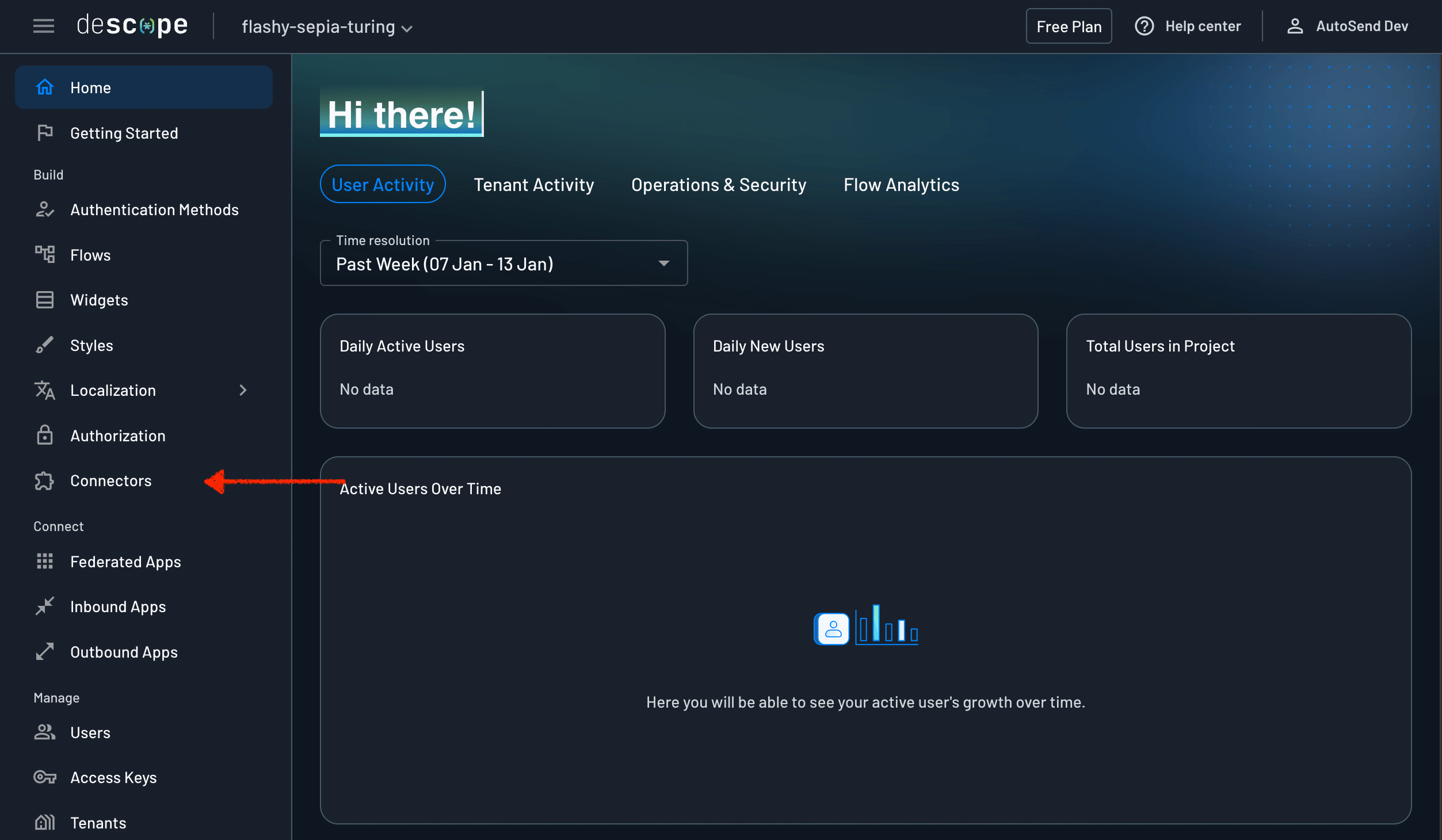
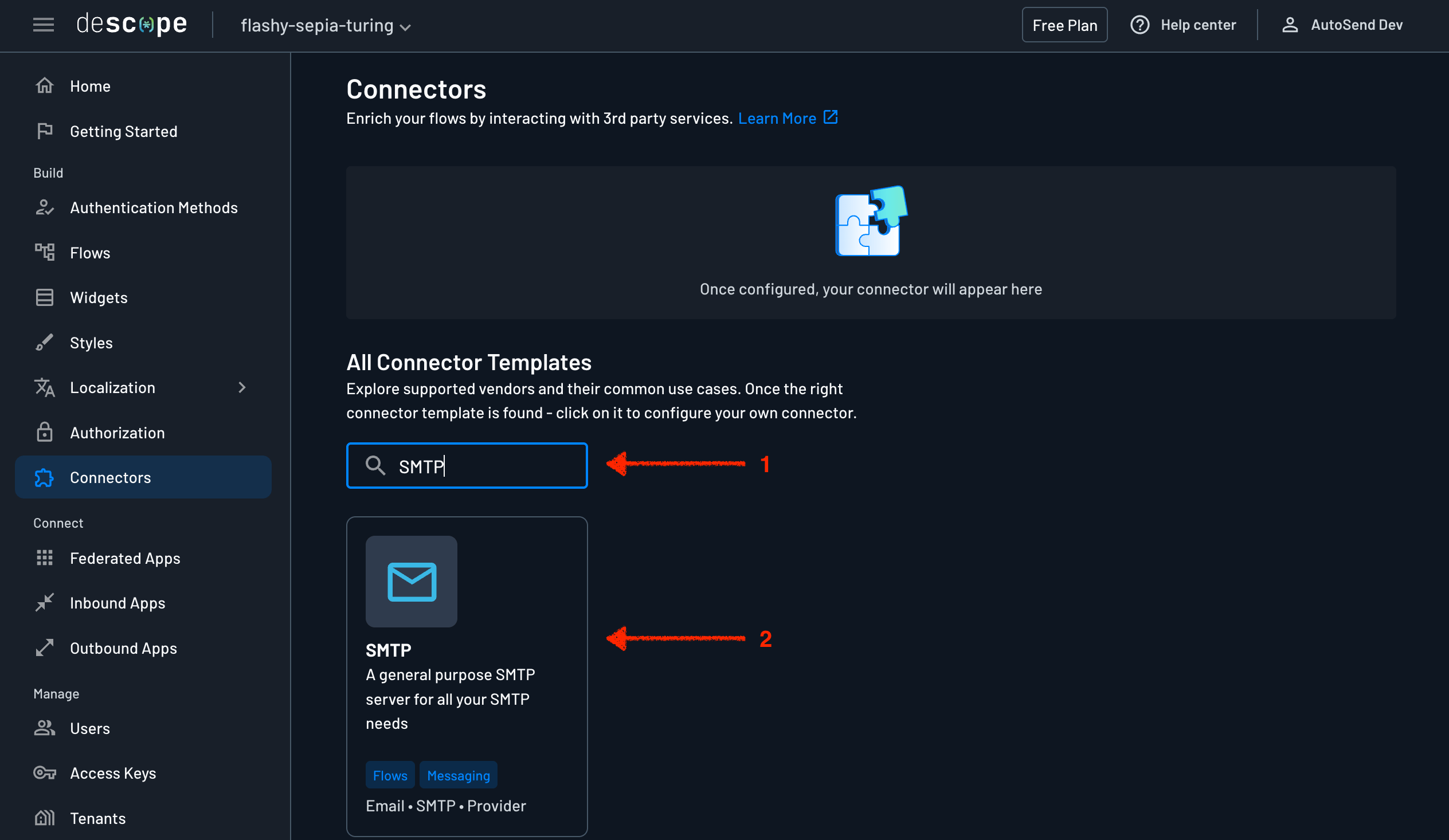
Enter SMTP Credentials
Fill in the following settings: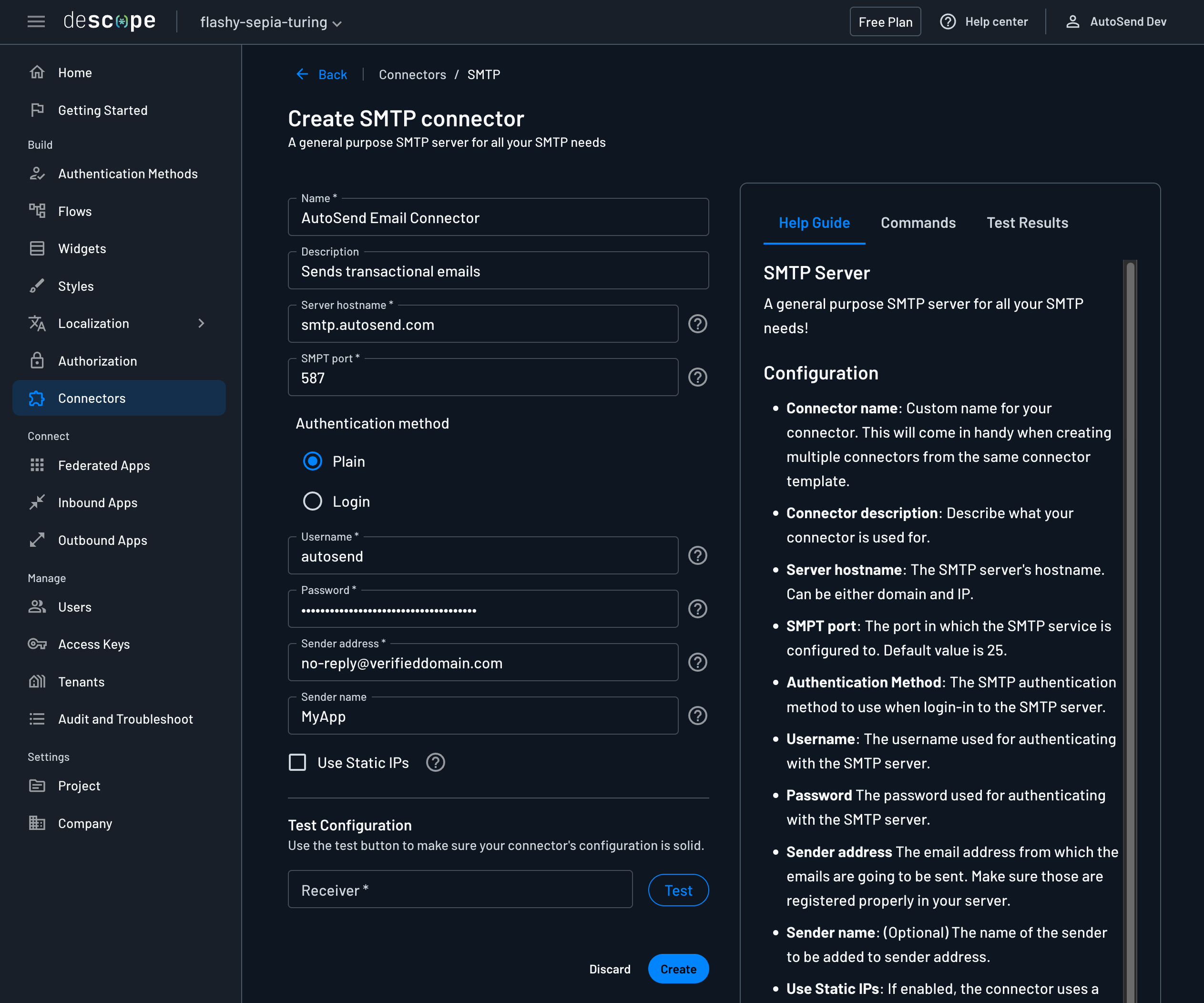
The SMTP password is no longer your API key. Create a project-specific SMTP key from the SMTP tab in Project Settings.
Test Configuration
Click the Test button to verify your SMTP configuration is working correctly. Check the Test Results panel for success or error details.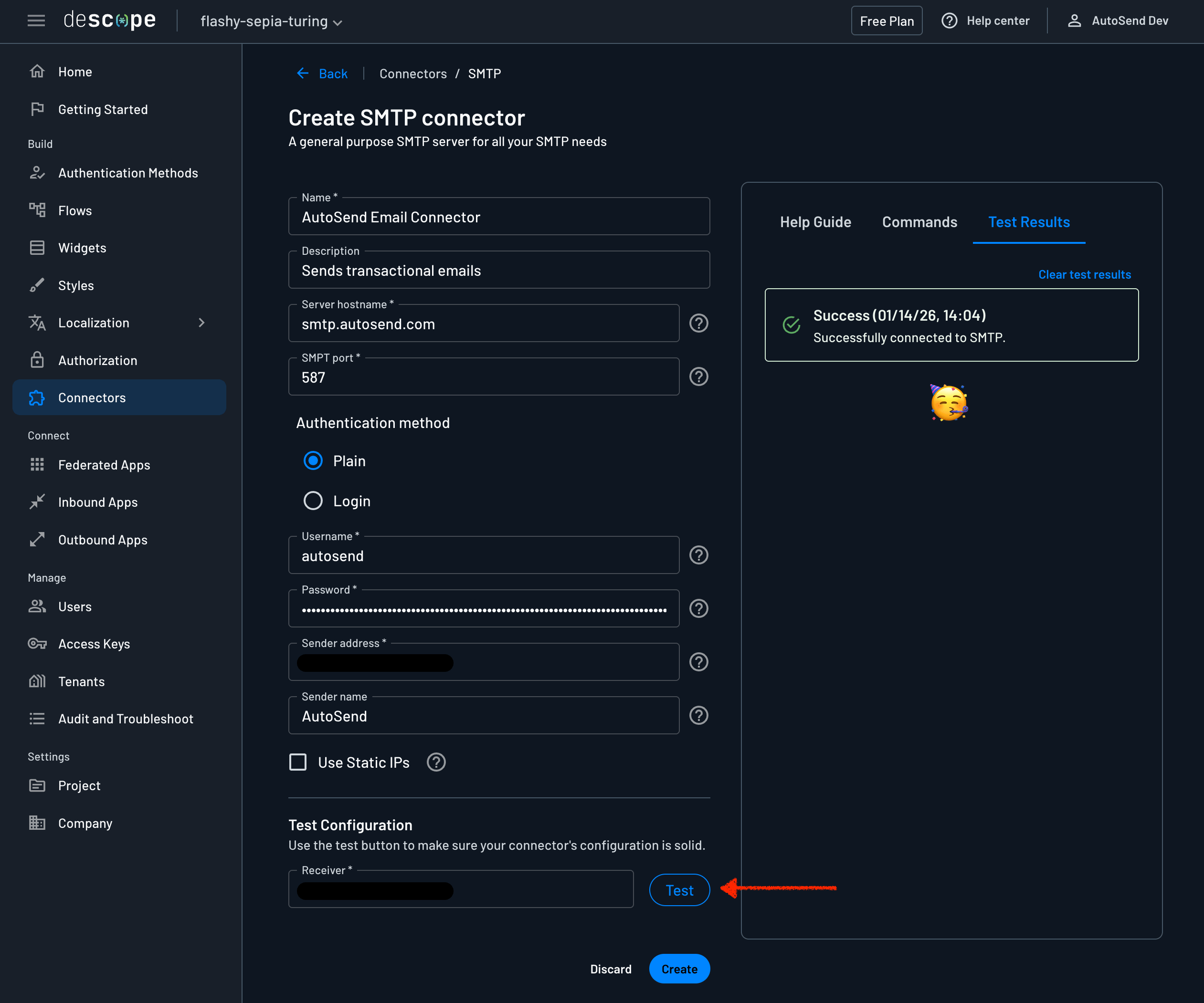
Dynamic Values
Descope supports dynamic values in sender fields using template syntax:- Sender Address/Name: Use
{{options_<value>}}format for dynamic sender configuration - Recipient: Set the
Tofield dynamically with{{user.email}}
Troubleshooting
Emails not being sent
Emails not being sent
- Verify your SMTP credentials are correct
- Check that your sender email domain is verified in AutoSend
- Ensure the sender address matches a verified domain
- Check Descope connector test results for specific errors
Authentication failed
Authentication failed
- Double-check your SMTP key is correct
- Ensure you’re using
autosendas the username - Verify your SMTP key is active in the SMTP Settings
Connection errors
Connection errors
- Verify the hostname is
smtp.autosend.com - Try using port
465with implicit TLS if port587fails - Check if your network blocks outbound SMTP connections
Emails going to spam
Emails going to spam
- Ensure your domain has proper DNS records (SPF, DKIM, DMARC)
- Use a professional sender name, not just “noreply”
- Check your domain reputation in AutoSend
Next Steps

Verify Your Domain
Set up SPF, DKIM, and DMARC for better deliverability

Email Activity
Monitor your email delivery and engagement

Webhooks
Set up webhooks to track email events in real-time

SMTP Introduction
Learn more about AutoSend SMTP configuration